The Double Bounce Rule Explained for Dink Players
You'll learn to apply the double bounce rule on the serve and the return, and understand how it changes your play at the kitchen line.
A French-language guide to the dink in pickleball: stroke, placement, kitchen strategy and rules for beginner and intermediate players.
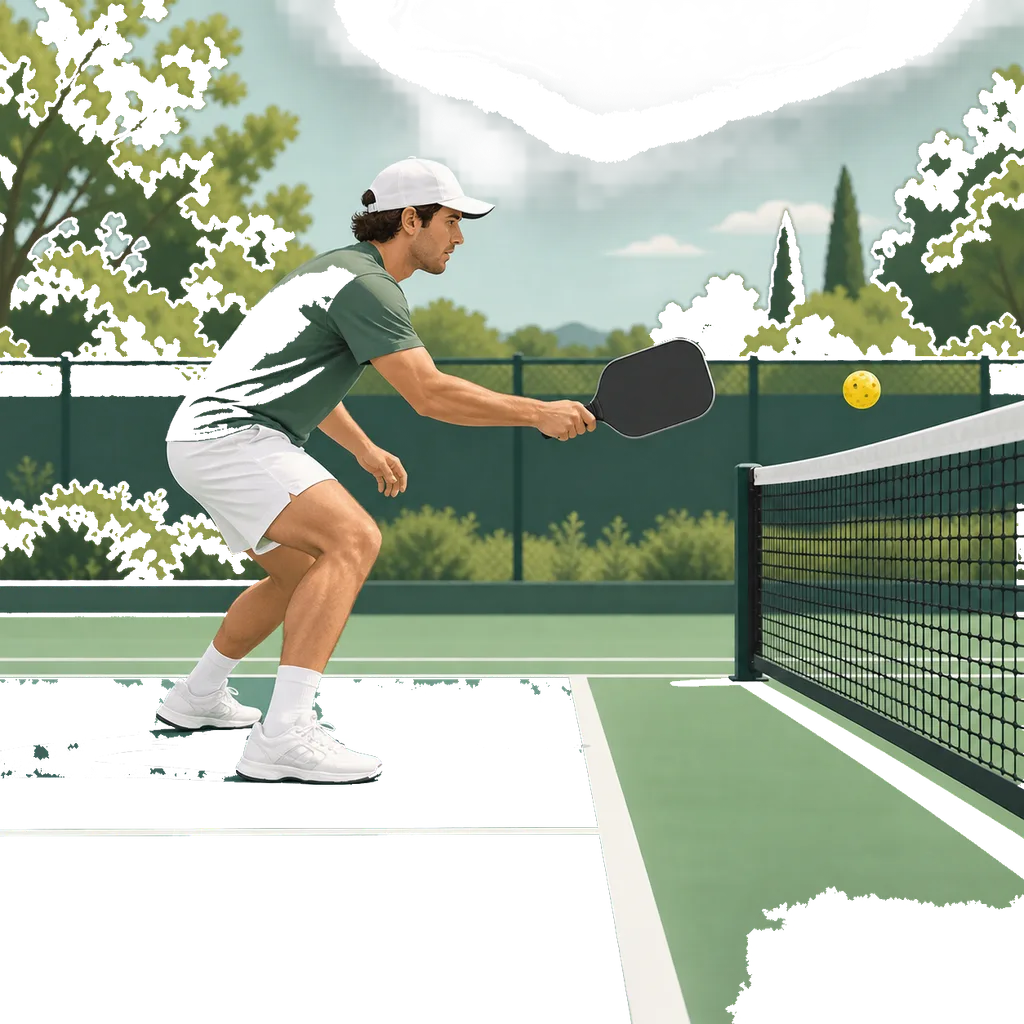
Each specialist term you meet here has a dedicated page: a short definition, what it does, an example and the usual questions.
You'll learn to apply the double bounce rule on the serve and the return, and understand how it changes your play at the kitchen line.
You'll know how to choose between a dink, a drop and a drive based on your position and the ball you receive.
You'll know how to pick a target for your dinks and vary directions to create errors.
You'll know how to check your posture and footwork before every dink.
You'll learn to define a dink, know what it's for and spot one in a rally.
You'll learn to hit a short, controlled dink with a relaxed grip and a shortened swing.
Each guide walks through one topic end to end, and leads to the pieces that dig further.
Targets, patience and doubles play at the kitchen line.
Non-volley zone, double bounce and related faults.
Place your dinks, build the rally, and know when to attack.
The non-volley zone and double-bounce rules, and the most common faults around the dink.